










Why your AC smells like burning in Colorado

Tell a local repair pro what your air conditioner is doing.

Find my pro

A burning smell from your AC usually means dust burning off the motor or electrical parts overheating inside the unit, not the refrigerant itself. In Colorado's dry heat, dust builds up fast on the fan motor and blower, and when the system runs hard through a hot afternoon, that dust can singe and give off a sharp smell for a few minutes before it fades. That's usually harmless. A smell that doesn't fade, or smells more like melting plastic than dust, points to something else: a motor bearing seizing up, a capacitor failing, or wiring insulation breaking down under heat. Any of those can damage the system further or start a fire if the unit keeps running. If the smell is faint and brief after the system has sat unused, it's worth noting but not urgent. If it's strong, lasts, or comes back every time the AC cycles on, turn the system off and have it looked at before running it again.

A gray outdoor air conditioner condenser unit on a concrete pad beside a house with horizontal siding and a light stucco wall, with a disconnect box and refrigerant lines on the wall and a shrub and mulch bed at left.

What an overheating motor smells like

A hot, acrid smell with a burnt-dust edge usually points to the blower motor or the fan motor working too hard. Bearings wear down, the motor strains, and the windings inside get hot enough to scorch the dust sitting on them. If the smell shows up every time the system kicks on and fades after a few minutes, that pattern fits a motor problem more than a one-time dust burn-off.

A gray outdoor air conditioning condenser unit on a concrete pad surrounded by gravel, next to a white horizontal-lap-sided house wall with an electrical box and conduit, against a blank white background on the left.

What a wiring problem smells like

A sharp, plastic smell, closer to an electrical fire than burnt dust, points to the wiring or a part like the capacitor or contactor. These sit in the outdoor unit and switch heavy current every time the compressor starts. A loose connection or a failing part arcs instead of switching cleanly, and that arcing burns insulation. This smell tends to come with the outdoor unit clicking or humming oddly right before it cuts off.

A woman in a cream cardigan and jeans stands with one hand raised facing an open front door of a gray horizontal-siding house, with a black lantern wall light, a potted shrub with yellow flowers, and a stone-faced porch column.

What that smell means for your house

A burning smell means something in the unit is running hotter than it should, and that keeps happening every time the system cycles on. In Colorado, with the AC working through long stretches of hot, dry afternoons, a motor that is already strained gets no real break to cool down. Leave it running and you risk the motor seizing or an electrical part failing outright, often on the hottest day of the week when you need the system most.

There is also the breaker to think about. Overheating parts can trip it repeatedly, and a system that keeps shutting itself off is already telling you it is not safe to keep running as is. Once you send the details through, you are done chasing down who can look at it. A contractor who covers your area gets your information and reaches out to you, so the next call is theirs to make, not yours.

A living room corner with a beige upholstered armchair holding navy and striped cushions, a small round wooden side table with a carved bowl and a potted green plant, a framed landscape picture on a pale wall, built-in shelving, and a curtained window.
A woman in a gray turtleneck sweater stands by a window looking outside at snowy ground, with a dimly lit living room containing a sofa, shelves, lamp and a lit candle behind her.
A woman in a cream cable-knit turtleneck sweater stands in a warmly lit living room with a fireplace and shelves behind her, looking out a window toward snow-covered trees and a railed deck.
A woman in a cream knit turtleneck sweater stands by a window looking out at snow, with a lit fireplace, sofa and lamp in the room behind her.
A woman in a gray knit sweater sits by a window looking out at falling snow, with a dimly lit living room containing a sectional sofa, pillows, a lamp and houseplants behind her.

Call Now or Keep Watching

Call now

  • A burning smell that comes with the system shutting itself off means a safety switch is tripping, and that part is already protecting the unit from worse damage.
  • If the smell gets stronger each time the AC cycles on, the motor or wiring is heating up more with every run, not less.
  • A burning smell paired with smoke or a breaker that trips means electrical arcing somewhere in the unit, and that is not safe to wait out.
  • Dry Colorado air lets dust pack into a hot motor fast, and once windings scorch, the damage does not reverse itself by running the system less.
  • A smell that shows up on the first hot afternoon and keeps returning every time the AC works hard is a sign the problem is getting worse, not settling down.

Keep watching

  • A faint burning smell that shows up once, right when the AC starts up for the season, often clears on its own as leftover dust burns off the coil and ductwork.
  • If the smell is mild and fades within an hour of the system running, it is likely dust settling off rather than a part failing.
  • No smoke, no tripped breaker, and no change in how the AC cools the house are all signs the smell may not need same-day attention.
  • A smell that only happens once after the unit has sat unused for months is different from one that returns every time the system cycles.
  • If the house still cools evenly and the AC runs its normal cycle length, the system is not yet showing signs of real strain.
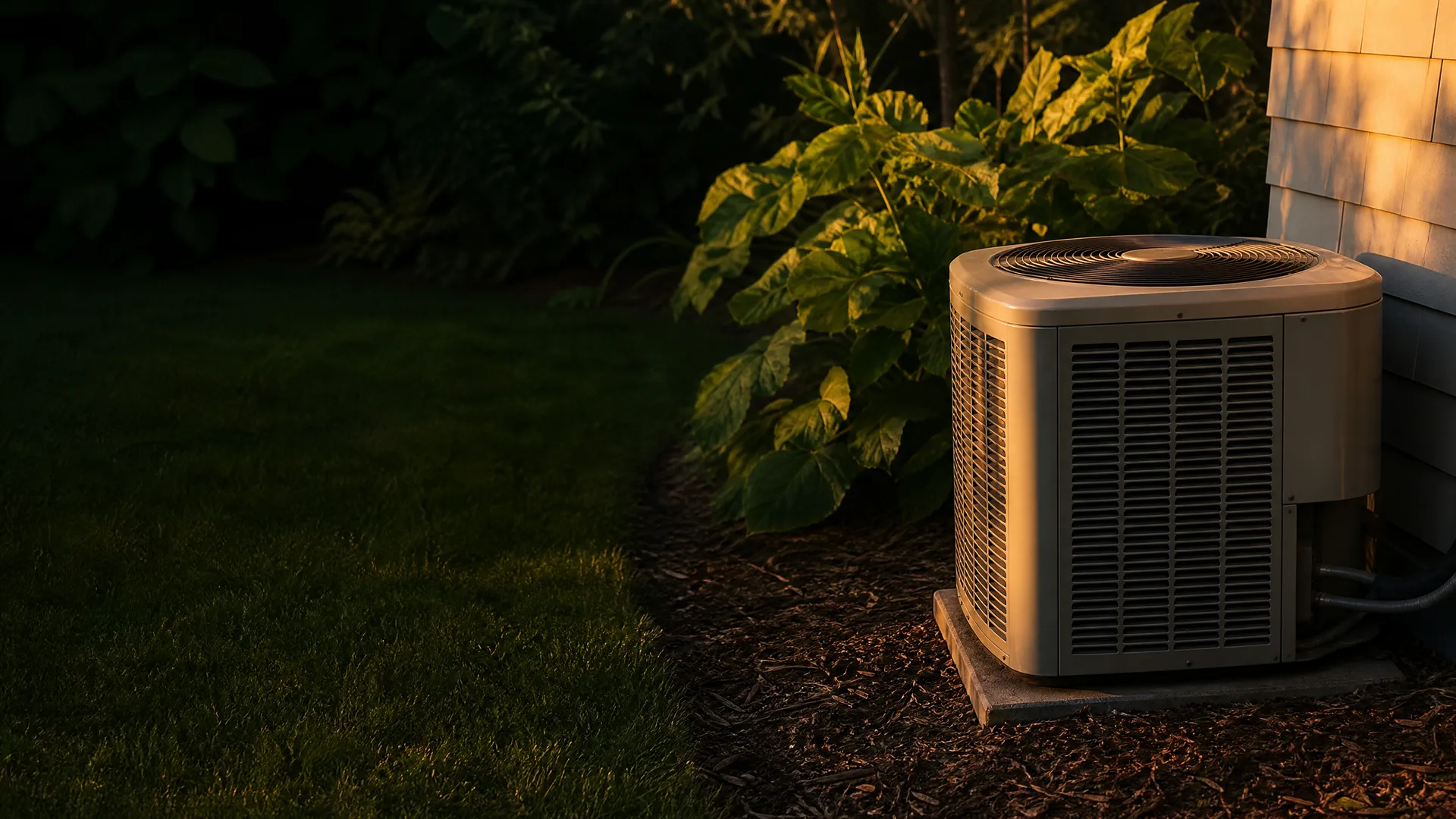
An outdoor air conditioner condenser unit sits on a concrete pad beside a shingled house wall, surrounded by mulch, broad-leaved shrubs and a lawn in low evening light.

You're out back around seven, watering the tomatoes while the light turns gold over the fence line. The condenser sits against the house, and it's quiet, too quiet. You walk over and the fan blades aren't moving. A thin smell catches you, hot metal and scorched dust, coming off the top vents. The unit hums like it's trying but going nowhere. Inside, the house is already a few degrees warmer than it should be this late in an August day. You crouch down, feel the side panel, it's warm to the touch. You've caught it before it got worse. You pull out your phone, fill out the request, and let someone else take it from here.

Matched to your air conditioner job

Once you send the form, finding a pro is off your list.

You only hire the pro if you want to.

Smell comes and goes with weather

A faint burning smell on the hottest afternoons, gone by evening, usually tracks with how hard the system is working. Colorado's dry heat pushes the unit to run longer, and dust that's been sitting on the motor since spring finally gets hot enough to smell. If it fades once the temperature drops and doesn't come back the next day, the system may just need the dust cleared off before it turns into something worse. Still worth having someone look, since what looks minor today is the same wear that leads to a seized motor later.


Smell is steady and getting stronger

A burning smell that shows up every time the AC cycles on, and seems a little stronger each time, points to something that isn't going to resolve on its own. That pattern usually means a part is wearing down under heat it wasn't built to handle, whether that's a motor bearing or a wire connection working loose. Colorado summers don't let the system rest for long stretches, so a part already under strain keeps getting pushed. This is the case where waiting costs more than it saves, since the part failing fully usually means a bigger repair than catching it now.

An outdoor air conditioner condenser unit on a concrete pad beside a house with light gray vinyl siding, with a gray electrical disconnect box and conduit on the wall, gravel beds and dried plants nearby, and a concrete sidewalk in the foreground.
Before you get your air conditioner repair
A gray outdoor air conditioning condenser unit on a concrete pad beside a house with horizontal siding and a stone veneer base, with a wall-mounted disconnect box and conduit, next to a shrub bed and a concrete patio.
After you get your air conditioner repair

Wait and keep an eye on it

A burning smell that's faint, shows up once, and doesn't come back might just be dust on a motor that hasn't run hard yet this year. That can clear on its own after the first long run of the season. If the smell doesn't return and the AC keeps cooling the way it should, there's no fault here. Still, mark the day it happened. If the smell shows up again within a week, or shows up alongside anything else, a hum that wasn't there before, a cycle that's shorter than usual, that's your sign the first smell wasn't nothing. Colorado's dry air means dust accumulates fast between seasons, so one burnt-dust smell in the first hot week isn't unusual on its own.

Get it looked at now

A burning smell that keeps coming back, gets stronger, or shows up with anything else, the system shutting off, a breaker tripping, a new sound from the unit, means something is actively overheating and it's not going to fix itself by running less. Each cycle that triggers the smell is another cycle of heat on a motor or wire that's already stressed. Colorado summers mean long stretches of afternoons where the AC runs for hours at a time, and a part that's struggling through one of those stretches won't get easier to handle. Waiting here risks a motor that fails outright or wiring damage that costs more to fix than catching it now.

A bearded man in a plaid flannel shirt stands in a kitchen looking out a window toward snow-covered shrubs, with a steaming mug on the windowsill and potted plants on a shelf behind him.
A smiling man with dark curly hair in a navy t-shirt sits on a gray couch indoors, with a large-leafed plant and a window in the background.
Single-story house with tan horizontal siding and a dark shingled hip roof, fronted by a patchy green and brown lawn and a concrete walkway leading to the covered entry.

Colorado summers feel dry, and the numbers back that up. Averaged across June, July and August, the dew point here sits around 42°F, according to NOAA climate data. That's low. Dry air doesn't make your AC work less, though. It makes dust the problem instead of humidity. With so little moisture to settle dust down, it stays airborne and drifts straight onto the motor and blower wheel. That's the dust that scorches and gives off the burning smell when the system runs long hours through a hot afternoon. In a muggier state, that same dust would clump and fall away. Here, it just keeps building on the parts that run hottest.

NASA POWER T2MDEW county cells weighted by homes

A gray outdoor air conditioning condenser unit on a concrete pad beside a house with horizontal lap siding, with a conduit and electrical disconnect box on the wall and a green shrub in mulch to the right.
A clean unit with clear airflow around it keeps dust off the motor, so a burning smell has nowhere to start.
A weathered outdoor air conditioner condenser unit on a concrete pad beside a house with horizontal vinyl siding, with a conduit and disconnect box on the wall to the right.
A grille packed with dirt and debris traps heat against the motor, and that's often where the burning smell begins.
  1. Dust settles on the motor windings all spring and early summer.

  2. The system runs longer as Colorado afternoons stay hot and dry.

  3. Windings heat up and scorch the dust sitting on them.

  4. The burnt-dust smell pushes through the vents into your house.

Power costs 15.69 cents per kilowatt-hour statewide

At 15.69 cents per kilowatt-hour, every hour your AC runs longer than it should shows up on the bill. A motor straining under caked-on dust pulls more power to do the same job, so that burning smell isn't just a repair you can put off, it's already costing you more to ignore.

EIA-861 2025 statewide residential average

What the Smell Is Telling You

  • A burning smell almost always traces back to dust on a hot motor or a part straining past what it can handle.
  • If a safety switch has already shut the system off, that part did its job before anything got worse.
  • A smell that fades and returns with the next hot afternoon points to the same motor working too hard each cycle.
  • Leaving it alone past the first warning lets a dusty motor turn into a burned-out one.
  • Once you send the form, you're done hunting for someone to call, a contractor takes it from there.
  • Colorado's dry summers keep feeding dust onto the motor, so the smell won't solve itself on its own.

A burning smell from your AC is the system telling you something specific. Most of the time it's dust that's settled on the motor since spring, finally getting hot enough to scorch. Sometimes it's a part working harder than it's built to, and a safety switch cutting power before that gets worse. Either way, the cause is mechanical and it's inside the unit, not a sign of a refrigerant leak or anything in the ducts.

What matters now is what happens if it's ignored. Colorado's dry summers mean dust keeps building on the motor every week the system runs, and every hot afternoon asks that motor to work through it again. A smell that fades by evening and comes back the next day isn't going away on its own. It's the same strain repeating, and each cycle adds a little more wear until a part that was just dusty burns out for good.

None of this requires you to figure out which part it is or how bad it's gotten. That's diagnosis, and it's not something to guess at from the smell alone. What you can do is stop the guessing by sending the form. Once it's in, the work of finding someone qualified is off your plate. A contractor who handles this kind of repair takes it from there, and you're no longer the one tracking down who's available or whether the smell means something serious. You already know enough to act. The rest is someone else's job now.

An outdoor air conditioner condenser unit sits on a concrete pad beside a house with horizontal siding and stone veneer, next to mulch, shrubs, and grass.

An air conditioner pro near you

Step 1 of 3: Equipment