A capacitor doesn't get a warning cycle
It holds its charge until it fails outright. A unit that worked fine yesterday can refuse to start today, especially during the hottest stretch of a Colorado afternoon.

Your AC has been acting up, maybe it won't start, or it hums without kicking on, or it shuts off a few minutes after it starts running. In Colorado's dry heat, an AC that can't keep up gets noticed fast. The capacitor is a common cause, and knowing the signs before you call someone can save a wasted trip and help you describe what's happening.
The capacitor stores the jolt of electricity the compressor and fan motor need to start spinning. When it weakens, the motor doesn't get that initial push. You'll hear a hum as it tries and fails to start, or see the fan spin slowly before catching, sometimes only after a nudge. A unit that shuts off on its own a few minutes after starting, or won't start at all on a hot afternoon, is often the same part giving out. Colorado's heat is dry, but it's still real heat, and a compressor that keeps trying to start against a failing capacitor runs hotter than it should. None of these signs confirm it on their own, but together they point the same direction.




It holds its charge until it fails outright. A unit that worked fine yesterday can refuse to start today, especially during the hottest stretch of a Colorado afternoon.
Get matched with a contractor who can check the capacitor and the rest of the unit. Once you send the form, finding someone is off your plate.
Walk past the outdoor unit and listen. A hum with no fan turning, a fan that spins slow when you nudge it with a stick, or a click that repeats every few seconds without the compressor ever catching, all point the same direction. Inside, you might notice the air coming from the vents isn't as cold as it was, or the system short cycles, running a few minutes and stopping before any room actually cools. Some people catch a burnt smell near the outdoor unit, which means heat built up somewhere it shouldn't have. Left alone, a dying capacitor puts more strain on the compressor every time it tries to start, and a compressor replacement costs far more than the capacitor ever would.

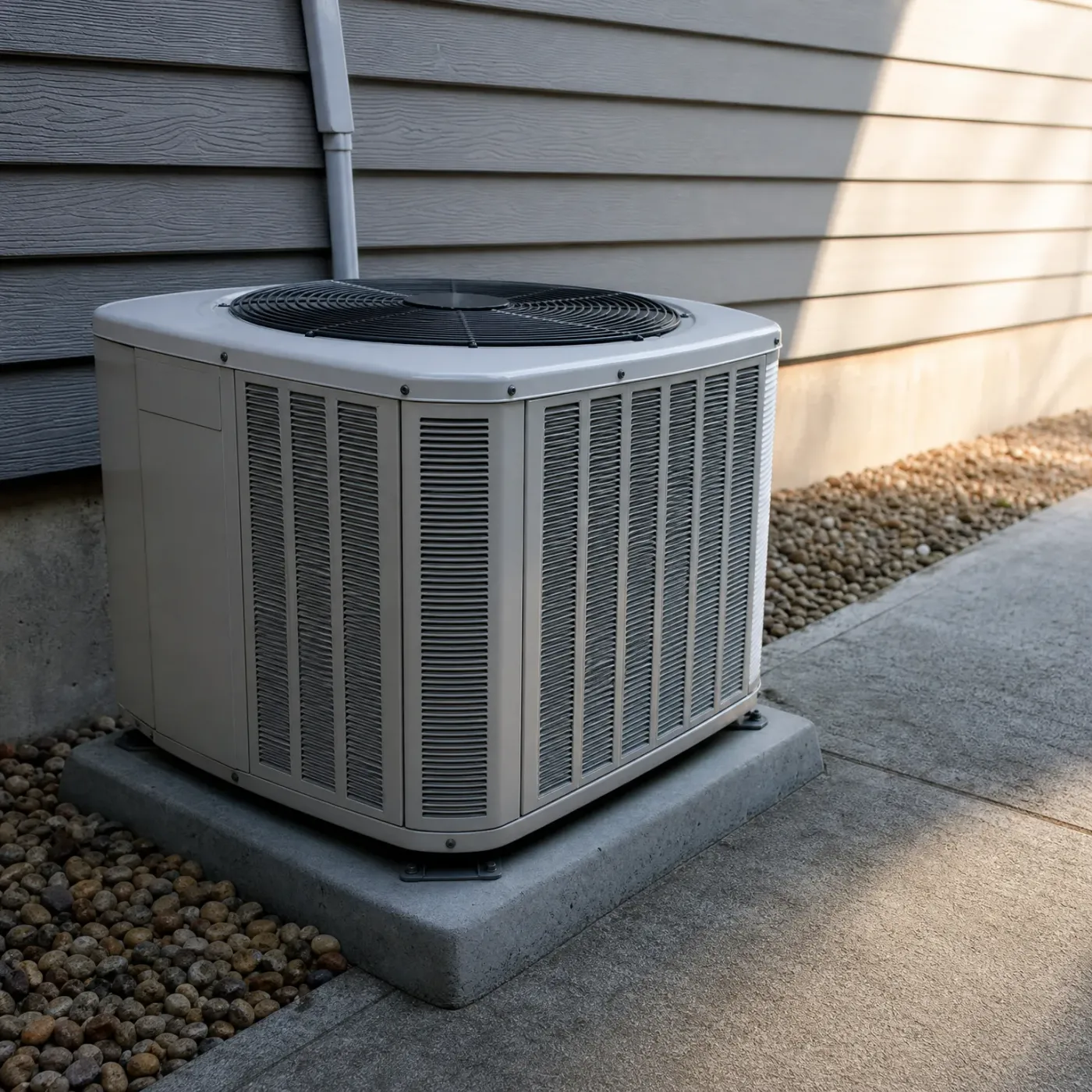
The fan catches right away and the compressor settles into a steady run. No hesitation, no clicking, no humming before it kicks on. The line set and disconnect box show nothing unusual, just a unit doing its job on a hot Colorado afternoon.

Dirt has built up across the grille and leaves sit piled against the base. A unit left like this works harder to pull air through, and that extra strain is the kind of thing that pushes a weak capacitor toward failing outright.




Get the air conditioner repair search off your mind today.
No charge to send it. You decide if you hire them.
A capacitor is a small part with one job. It stores up electricity, then dumps it all at once into the start winding of the fan motor or the compressor. That single push is what gets the motor spinning. Once it's turning, the motor doesn't need the capacitor anymore, it runs on regular current from there. The whole thing happens in under a second, which is why you never notice it when the capacitor is healthy. The unit just starts.
What wears a capacitor down is heat, and a Colorado summer afternoon gives it plenty. The outdoor unit sits in direct sun for hours, and the capacitor inside it runs hotter than it would somewhere shaded. Heat breaks down the material inside a capacitor faster than almost anything else, so a unit that's been baking all afternoon is pulling from a part that's already stressed.
A capacitor doesn't go from fine to failed overnight most of the time. It weakens first. A weak one still sends a push to the motor, just a smaller one, so the motor turns slower and takes longer to catch. Below a certain point, the push isn't enough to start the compressor at all. The motor pulls current and tries, but without enough of a push behind it, all that current turns into a hum instead of a start.
Most outdoor units run the fan and the compressor off the same capacitor, just wired to separate sections of it. That's why one weak capacitor can show up as trouble in both at once.
At 15.69 cents a kilowatt-hour, a struggling capacitor costs you twice. The compressor draws harder trying to start, and once it's running rough, it stays on longer to cool the house down. A straining AC shows up on the next bill before it shows up as a breakdown.
EIA-861 2025 statewide residential average
A bad capacitor shows up in the sounds before it shows up in the air. Humming with no fan, clicking that never catches, a slow start on the hottest part of the afternoon, a house that takes longer to cool than it used to. Any one of those is a capacitor losing its charge, and once it stops holding that charge the unit won't start at all. None of this gets better on its own, and waiting through another Colorado afternoon just means more strain on a compressor that's already working harder than it should. Once you send the form, you're done hunting for who to call or whether they're any good. A contractor who knows these units gets in touch, and from there it's a matter of testing the capacitor and swapping it if it's weak. You won't be the one tracking down parts or chasing a callback. That part is off your plate the moment the form goes in.
Once you send the form, finding a pro is off your list.
There's no charge for the request.
