A single-stage AC in Colorado runs full blast or not at all. On a hot, dry afternoon in July it slams on, cools the house fast, and shuts off, then does it again an hour later. A two-stage system has a low setting it uses most of the time and a high setting it saves for the worst heat. It spends more hours running at low speed, which means steadier temperatures room to room and less of that on-off cycling.
Whether that difference is worth paying for depends on your house and how long you plan to stay in it. If your current AC is old enough to be giving you trouble, you're already replacing it, and a two-stage unit is worth asking about. If your ductwork is uneven, low-speed cooling tends to smooth out the hot and cold spots better than a unit that only runs at full power.
Since most homes here heat with gas, the AC is doing one job and doing it for a real stretch of the year. A system that matches its output to the actual load outside, instead of overshooting every time, is easier on the parts that wear, like the compressor.
None of that tells you what's right for your house without someone looking at it. A local contractor who installs these systems every summer knows which brands hold up here and whether your ductwork and your home's layout make a two-stage unit worth the jump for you.
Send the request and that part stops being something you have to chase down. You won't be fielding calls from five different companies trying to win the job. One licensed contractor local to you gets the details, and from there it's off your plate.
Is a two-stage AC worth it in Colorado?
You've got one quote for a single-stage system and another for two-stage, and the price gap has you wondering if the upgrade actually does anything here or if it's just a nicer sticker. Colorado summers are hot but dry, and the AC isn't running the way it might somewhere humid, so it's fair to ask whether the extra stage earns its keep.
Yes, for most homes running central AC through a Colorado summer
A two-stage AC spends most of its time on low, which uses less power than a single-stage unit cycling on full and shutting off. Dry air helps here too. Low stage still has enough capacity to handle most afternoons without needing high, so the compressor runs longer at a gentler load instead of slamming on and off. That steadier run also pulls more moisture out of the air on the days it is needed, which matters even in a dry climate during a muggy stretch. High stage is still there for the hottest days, so you're not giving up cooling power to get the lower one. The upgrade shows up most in houses that run the AC for months at a time, not just a few weeks a year.
One installer gets your project, so there's no bidding war over it.
Sending the form costs nothing.
What low stage actually does
Low stage is built for exactly the kind of afternoon Colorado gets most often: hot, but with dry air that doesn't need much wringing out. The compressor runs at a reduced capacity, moving less refrigerant and pulling less power, and the blower moves air for a longer stretch instead of in one short burst. That longer runtime matters because it keeps air circulating past the thermostat and through the house evenly, instead of one room cooling fast while another lags. A single-stage system can't do this. It only has one speed, so it has to run at full capacity even when the house only needs a fraction of it.
When high stage earns its keep
High stage is there for the days low stage can't keep up with, the kind of stretch where the afternoon sun pushes the house past what the low setting can handle before the next cool evening gives it a break. The system shifts up on its own, runs at full capacity until the house catches up, then drops back down. Because that shift happens automatically, you're not choosing between comfort and efficiency on any given day. Dry heat lets a system spend more of its time in low stage than it could in a humid climate, where the compressor would need to run harder more often just to pull moisture out of the air.
Before you get your air conditioner installationAfter you get your air conditioner installation
Single-stage, running normal
This is a single-stage unit doing what it's built to do: full blast, cool the house, shut off. In dry Colorado heat that's a lot of cycles in one afternoon. Nothing's wrong here. It just works harder than a two-stage system would for the same result.
Older unit, coil caked with dirt
A dirty coil guard like this makes any system work harder, single-stage or two-stage. The unit still runs, but it's pulling more power to move the same heat. If yours looks like this, a two-stage upgrade won't fix a dirty coil, and a tech should look at both at once.
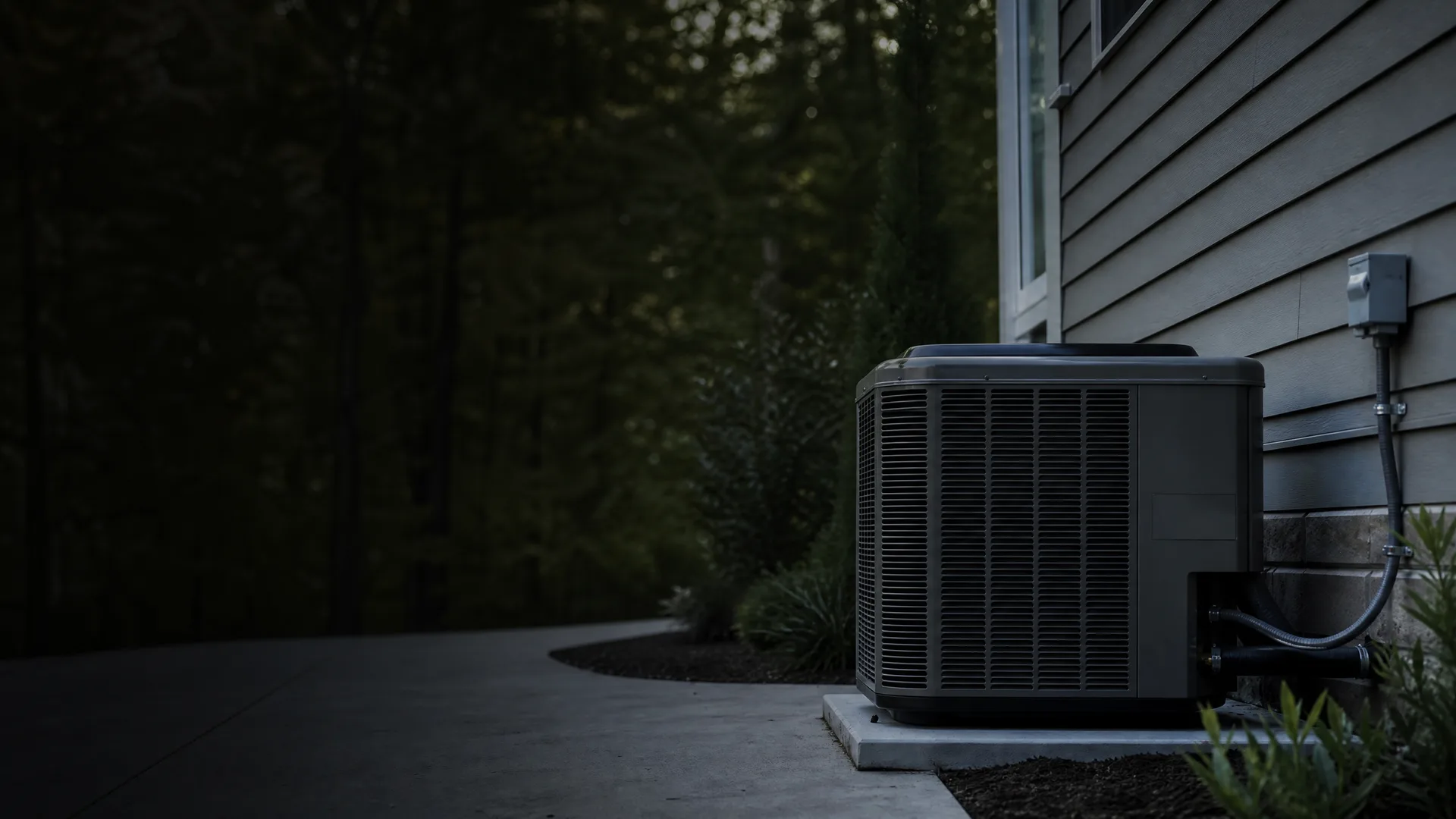
A two-stage unit like this runs on low most Colorado afternoons, so the compressor outside barely has to push.
This one's older and worn, and a single-stage compressor pushed to full blast every cycle wears a unit down faster.
Power costs 15.69 cents per kilowatt-hour statewide
At 15.69 cents per kilowatt-hour, every hour your compressor runs at full blast costs more than an hour on low. A two-stage system spends most of a Colorado afternoon on low, so the power you're paying for goes further.
EIA-861 2025 statewide residential average
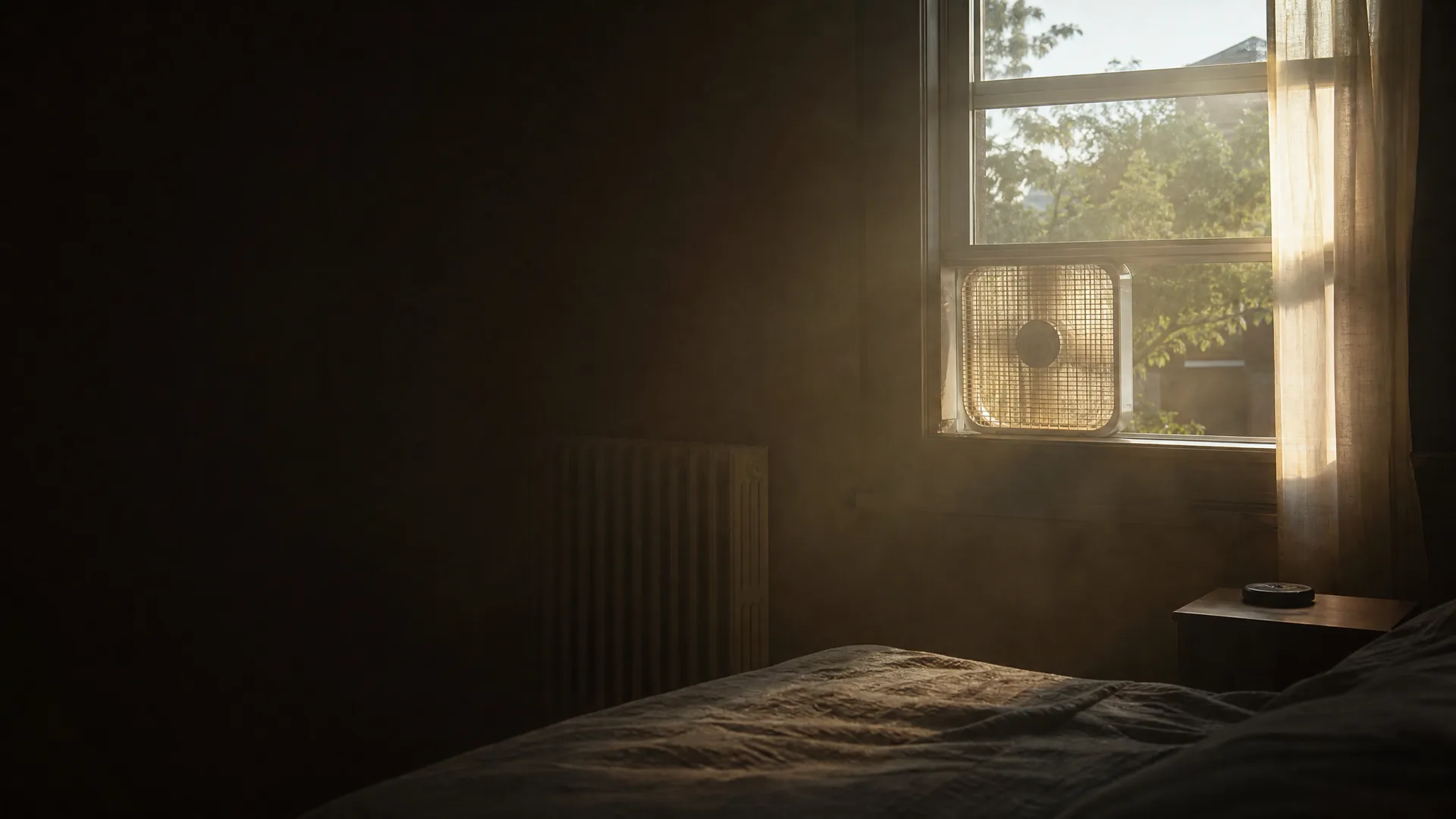
It's past eight and still bright out, the sun low over the foothills. You put the kids down an hour ago and the upstairs hallway is worse than the living room ever gets. The box fan in the window is just pushing hot air around the room, not cooling anything, because outside is barely any cooler than in. You can hear the compressor kick on below, that full-blast hum, then it cuts out too soon and the heat creeps back before it starts again. You lie on top of the sheets instead of under them. Dry heat or not, a room that's held onto a whole afternoon of sun doesn't let go of it fast.
A two-stage AC is worth it in Colorado, because low stage matches the dry heat you actually get most afternoons, and the compressor isn't slamming to full blast every cycle to do it. That's the whole answer. What happens next is just finding someone to put one in correctly, sized right for your house and your ductwork, and that part doesn't have to be a project of its own. Submit a request and it goes to one contractor, not a handful, so your phone isn't ringing all afternoon with competing quotes. The person who gets it is local, licensed, and installs these systems in Colorado homes all summer, which means they've seen what a two-stage unit needs here and what tends to go wrong when it's sized or installed poorly. You're not explaining your situation from scratch or vetting strangers. Send the request, and the work of finding the right person for the job is off your plate.
Stop chasing an air conditioner pro
Your request goes to one pro, not a list of companies.