









AC blowing warm air in Lakewood, CO

Send the request today and stop worrying about who to call.

Let a pro reach out

Why is my AC blowing warm air?

You go to the thermostat expecting cold air and get room-temperature air instead. In Lakewood, with summer temperatures regularly climbing into the 90s, this is the kind of thing that needs an answer today, not a guess you sit with for a week. Before you decide whether this is a simple fix or something bigger, it helps to know what's actually likely to be going on inside the unit.

Usually a refrigerant or airflow problem, not the thermostat

Most of the time, warm air from the vents means the system is still running but can't move heat out of the house the way it should. A dirty filter or a frozen evaporator coil can choke off airflow until the air coming out barely feels cooled. A low refrigerant charge does the same thing from a different angle: there's not enough refrigerant to absorb heat from the air passing over the coil. Either way, the compressor outside may be running fine while the air inside stays warm. With Lakewood summers pushing the unit hard for months at a time, these problems tend to show up right when the system is working its hardest, not during the milder weeks on either side of summer.

  1. Thermostat calls for cooling and signals the outdoor unit to start

  2. Compressor should pressurize refrigerant and send it to the condenser coil

  3. Low refrigerant or a failed compressor means no cold air reaches the vents

  4. Indoor blower keeps pushing air across a coil that isn't doing its job

A smiling man with dark curly hair in a dark green henley shirt sits on a light sofa in a living room with large windows, a lamp, shelving, a stone fireplace, and a bowl of popcorn in the foreground.
A smiling man in a dark long-sleeved henley shirt sits on a beige sofa in a living room, with a bowl of popcorn and a remote on the table in the foreground and shelves, a lamp, and a doorway behind him.
A smiling man with graying hair and stubble in a blue henley shirt sits on a gray sofa with cushions in a living room, with a bowl of popcorn on a wooden table in the foreground.
A smiling man in a dark green long-sleeve shirt reclines on a sofa in a dimly lit living room, with a bowl of popcorn on a side table in the foreground and a bookshelf, lamp, and houseplant behind him.

Once your house climbs to 90 degrees inside, it does not drop back down the moment the repair is done. Lakewood summers push hard enough on a closed-up house that the air conditioner is fighting from behind for hours after it starts working again. The thermostat is often not the problem. It can read the temperature correctly and still be sitting next to a compressor outside that never turned on. That is why warm air at the vents, with the thermostat set where it should be, usually points outside rather than at the wall unit. Letting the system keep running while this happens does not help. Warm air moving across a coil that is not getting refrigerant can freeze that coil, which turns a same-day fix into a longer one. Anyone in the house sensitive to heat, or a pet that cannot tell you it is struggling, feels a 90 degree afternoon well before anything else in the house shows signs of it.

What Warm Air Means for Your House

  • A house that sits at 90 degrees inside instead of cooling down can take hours longer to recover once the system is fixed.
  • Warm air from the vents while the thermostat is set low usually means the compressor outside has stopped working, not just a setting that needs adjusting.
  • Running the system while it blows warm air can freeze the indoor coil and turn a repair into a bigger one.
  • Pets and anyone sensitive to heat feel a 90 degree afternoon in Lakewood well before it shows up as an obvious problem elsewhere in the house.
  • A thermostat that still lights up and responds to touch can be sitting next to a compressor that never started at all.
  • Waiting through another hot afternoon to see if it resolves on its own usually just means a longer stretch without cooling.
An outdoor air conditioning condenser unit on a concrete pad beside a house with horizontal lap siding, with an electrical disconnect box and conduit on the wall, mulch and a green shrub to the right, and a concrete walkway in the foreground.
Before you get your air conditioner repair
A gray outdoor air conditioner condenser unit on a concrete pad beside a house with horizontal siding and a stucco foundation, with a disconnect box and conduit on the wall, decorative gravel, mulch, and a shrub nearby.
After you get your air conditioner repair

A house in Lakewood on a 95 degree afternoon does not just feel uncomfortable with warm air coming from the vents, it keeps heating up the longer the compressor sits dead outside. Rooms upstairs will climb past what the thermostat shows, and anything that cannot take heat, candles, some medications, a pet left home during the day, is sitting in it too. Running the blower on a system that is not actually cooling does not slow this down. It just moves warm air around the house and pushes your power bill up for no relief. The longer a failed compressor or a refrigerant leak goes unaddressed, the more the compressor itself is at risk, since some of these problems get worse the longer the unit keeps trying to run. What started as a thermostat that will not hit its setting can turn into a bigger repair, or a house that takes most of a day to cool back down once the system is finally working again.

A woman in a dark gray sweater reclines on a couch with her eyes closed and a knit blanket over her lap, an open book resting face-down in front of her, with a lit table lamp and shelving blurred in the background.
A bearded man in a dark navy sweater over a collared shirt smiles and looks off to the side while seated at a dinner table with a glass of red wine, a lit candle, and a plate of food in the foreground of a dimly lit room.

Hand off the search today

A system blowing warm air does not fix itself by waiting. The compressor outside is either stuck or on its way out, and every afternoon it sits idle the house gets further behind. Finding someone to look at it usually means searching for a contractor who answers the phone, calling a few, explaining the same thing each time, then waiting to see who actually shows up. Send the request here and that part is done. One contractor in Lakewood gets it, not a list of five you have to sort through yourself. You go back to dealing with a warm house instead of a phone full of calls you haven't made yet. With temperatures in the 90s outside, the sooner someone gets eyes on that outdoor unit, the sooner the vents are blowing something other than room temperature air again.

What a low refrigerant charge does

Refrigerant doesn't get used up the way fuel does. If the charge is low, it's because it leaked out somewhere in the line set or the coil. A system running low can still pull air through the blower, which is why you feel airflow but no cold, but the coil can't absorb heat the way it's supposed to without enough refrigerant moving through it. Left alone, a compressor running on a low charge works harder than it should and can wear out faster than one with a correct charge. Topping it off without finding the leak means the same problem comes back, often within the same summer.

Why the compressor is the usual culprit

The compressor is the only moving part in the outdoor unit that pressurizes refrigerant, and it's the part under the most strain every time the system runs. A capacitor that's gone weak can keep the compressor from starting at all, even though the fan on top still spins. A compressor that's seized or shorted out won't start no matter what sends it power. Either way, the outdoor unit can look like it's doing nothing, or doing something and failing anyway, while the indoor blower keeps blowing air that never got cooled.

Cooling runs July through July

Jefferson County only runs cooling in July. That's the one month your AC has to work when it's called on, so a compressor that quits now leaves you with no real backup plan until the weather breaks on its own.

NOAA nClimDiv 1991-2020

A gray outdoor air conditioner condenser unit on a concrete pad beside a house with horizontal lap siding, with a flowering shrub at left and a disconnect box with conduit on the wall at right.

AC working normally

This is what you want to see: the unit sitting quiet on its pad, cycling on when the thermostat calls for it and sending cold air through the vents. The area around it stays clear, and the disconnect box and wiring are intact and dry.


An outdoor air conditioner condenser unit on a concrete pad beside a house with light horizontal vinyl siding, surrounded by bare dirt, gravel and dry leaves, with refrigerant lines and conduit running along the wall.

AC in trouble

Leaves and dirt piled against the base, lines along the wall worn or coated in frost, a cabinet showing years of weather. A unit left like this is already working harder than it should, and warm air at the vents is often the next thing you notice.

What are you noticing around the house right now

You've probably already checked the vents more than once, hoping the air changes. The thermostat still reads your set temperature, but it's not dropping, and the number on the wall and the air in the room stop matching. Rooms with more windows or that sit on the top floor feel it first and worst. If anyone in the house is older, very young, or has a health condition that doesn't do well in heat, a house that won't cool down is more than an inconvenience. Food in the kitchen can start to feel the heat too if this drags into the evening. None of this means you did anything wrong. It means the compressor outside needs a look before the next hot afternoon.

A two-story house with cream horizontal siding, a dark gabled roof, and a white front door, fronted by a lawn, shrubs, and a concrete walkway leading to a sidewalk and street, with large leafy trees on both sides.

Summer air here doesn't carry much moisture. Jefferson County averages a dew point of 42°F across June, July and August, which is dry by most standards. A healthy air conditioner uses that dry air to its advantage, pulling heat out fast without fighting humidity in the ductwork. When the compressor is down, that advantage disappears. There's no damp air to blame for the warm vents, no muggy afternoon making it worse than it is. The dry air just sits there, heating up with the rest of the house, with nothing pulling the heat back out. What you're feeling is the equipment itself, not the weather working against it.

NASA POWER T2MDEW

A wooden table in the foreground holds a closed laptop and a ceramic mug of coffee, with a spindle-back wooden chair behind it, a beige wall with paneled wainscoting, a window at left, and a kitchen counter with a cutting board, bowl of fruit and greenery at right.

Warm air from the vents means the compressor needs a look

That's the answer. A thermostat set low and vents blowing room-temperature air points to the compressor outside, not a setting you missed or a filter you forgot. Low refrigerant, a failed capacitor, a compressor on its way out: whichever it is, it sits outside your control until someone with the right gauges looks at it.

Right now that might mean an hour online comparing companies you've never heard of, calling a few, explaining the same thing three times, then sorting through quotes that don't quite match up. Send the form instead and that part is done. You're not left holding the list of who to call next.

A dark ceramic mug on a round wooden table beside a light grey sofa with a woven cushion and knit throw, with a window, potted plant, floor lamp and wooden cabinet blurred in the background.
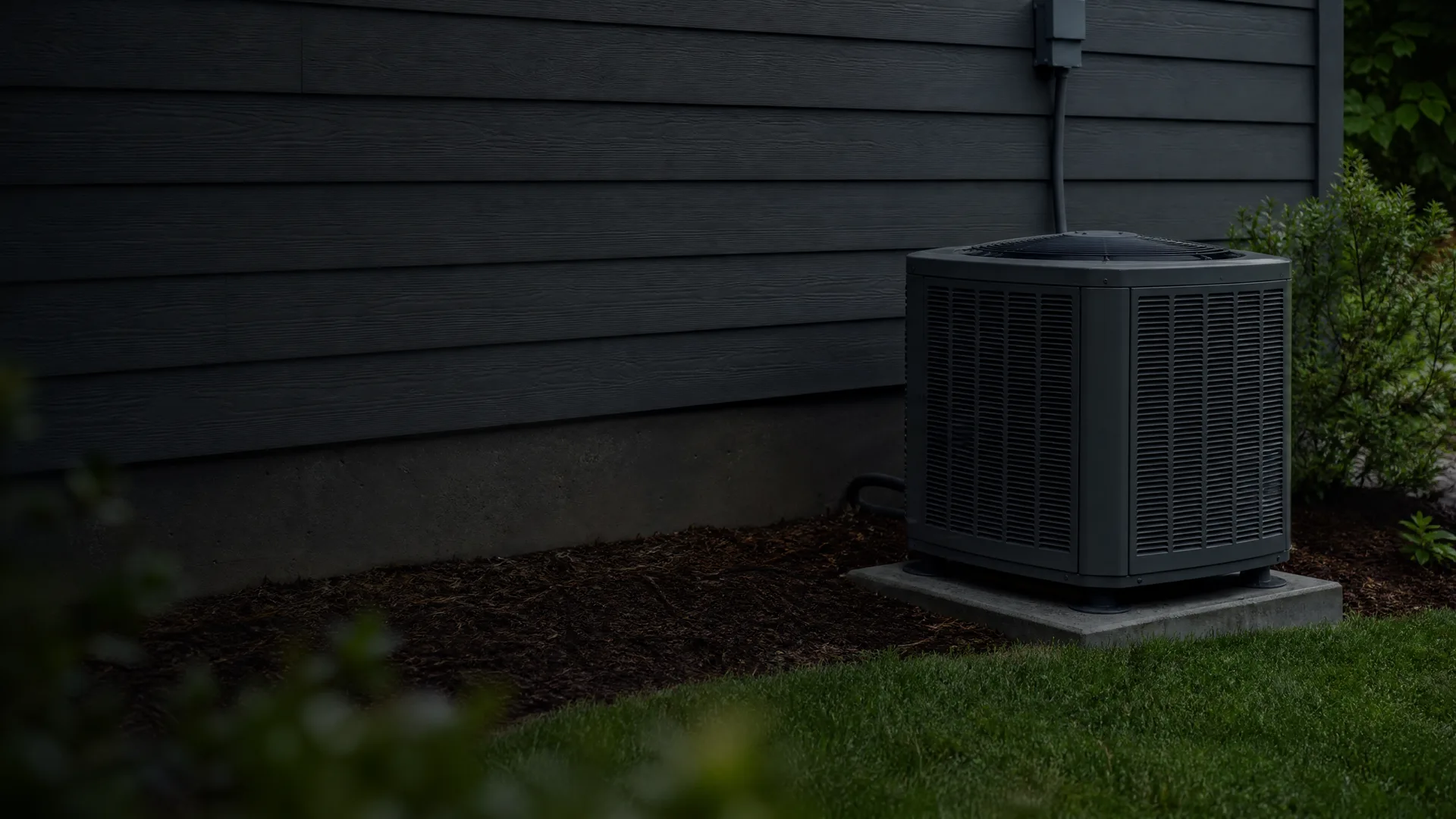
An outdoor air conditioner condenser unit sits on a concrete pad beside a dark horizontal-lap-sided house, with mulch, grass, and shrubs around it.

Hand off the air conditioner problem

Skip calling shops to ask who repairs air conditioners in Jefferson County.

Step 1 of 3: Equipment